Thursday, April 19, 2012

What’s Behind Two Fleas?

A canine flea collar commercial currently running on television asks the question: What’s behind two fleas? Answer: The next generation. A female flea can lay hundreds of eggs on your pet, ensuring that its work will be carried on by generations to come.

One Flea 400 Bites

A single flea can bite your cat or dog more than 400 times. During the day, the flea can consume more than its body weight of your pet’s blood. While flea bites may be just a nuisance to some pets, they can be dangerous to others. They cause allergies and a pet’s constant scratching to rid itself of fleas can cause permanent hair loss and other skin problems. A pet can get a tapeworm if it eats a flea that has one. Fleas feasting on your pet’s blood can cause anemia and, in rare cases, death.

About 1/16th of an inch, fleas are dark, reddish-brown, wingless insects. Their bodies are flattened side to side, which allows them easy movement through your pet’s coat. Their bodies are hard, polished and covered with many hairs and short spines directed backward. Their long legs give them the ability to jump seven or eight inches into the air.

Sunday, April 8, 2012

Itsy Bitsy Spider Creepy and Crawly on the Kitchen Wally

De Spin/The Spider

Allow video to load, then click to play

The itsy bitsy spider went up the water spout
Down came the rain and washed the spider out
Out came the sun and dried up all the rain
And the itsy bitsy spider climbed up the spout again


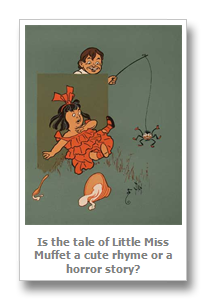
The Tale of Little Miss Muffet
As if spiders didn’t frighten us enough as children when we heard how one chased Little Miss Muffet away as she tried to eat her curds and whey, our fear was heightened in 2001 with the grade B monster movie Arachnid in which a giant killer spider menaces the survivors of a plane crash. Fortunately for the survivors, the spider loses when it falls onto a stalagmite.

Spiders are arthropods called arachnids. There are some 34,000 species belonging to about 105 families, although some specialists in the study of arachnids estimate that only 20 percent of spider species have been described, which means that there may be as many as 170,000 spider species.

Monday, April 2, 2012

Not Even Mighty Mouse Can Save the Day If Your Home Is Home to Mice and Rats

Everyone over a certain age will remember Mighty Mouse. Beginning on television in 1955, and continuing for almost 12 years, Mr. Trouble never hung around when he heard this mighty sound. “Here I come to save the day! That means that Mighty Mouse is on the way.”

When rats and mice enter homes, farm buildings and warehouses, they’re not there to turn a “wrong to right.” They’re seeking food and shelter. They eat or contaminate large quantities of food and damage buildings, stored clothing and documents. They also serve as carriers of disease, including Rat-bite fever, Weil’s Disease, pox, plague, trichinosis, typhoid and a host of others.

Monday, March 26, 2012

Chinch Bugs #1 Enemy of St. Augustine Grass

Every weekend you’re out there tending to your lawn, weeding, watering and spending hundreds, if not thousands, of dollars on food and fertilizer to make it the pride and the envy of the neighborhood only to one day discover the grass inexplicably turning yellow, then reddish-brown and finally dying. This is the foul work of the chinch bug. A complex of three different species within the same family, chinch bugs have piercing-sucking mouthparts and they feed on the sap of grass plants.

Sunday, March 18, 2012

And Don’t Let The Bed Bugs Bite


good-night-bed-bugs-ag1When you were a child, and your parents sent you to bed, after they said, “Good night, sleep tight,” there’s a good chance that they added, “and don’t let the bed bugs bite.” As children, we thought this was a cute rhyme, and while some of us may actually have been frightened by our parents’ admonition, probably few of us were really bitten by bed bugs.
Eradicated 60 Years Ago
In fact, it was thought that bed bugs had been eradicated in the U.S. over 60 years ago. That is, until 2010, when New York City’s massive bed bug infestation made national headlines. These pests were found not only in hotels but also theaters, concert halls and retail stores, giving New York the dubious distinction of being the most bed bug infested city in the country. Bed bugs got so out of hand that in that same year five states asked the Defense Dept. for money to help get rid of bed bugs.

Monday, March 12, 2012

By Any Other Name a Cucaracha Is Still a Roach

Click to play. Kumbia Kings
Nearly everyone is familiar with the urban legend that cockroaches could survive a nuclear explosion. The Discovery Channel’s MythBusters team decided to put this rumor to the test and concluded that because of their simple bodies, it is possible that cockroaches could, in fact, continue to exist.

Another rumor is that the presence of cockroaches indicates a dirty home. Relax! Don’t grab the mop just yet. Your home can be meticulously clean but if there are cockroaches in the building, they will seek out food and water and your home or pantry may supply them with the small amount of food they need to survive. The presence of one cockroach may signal that the population is low because of a lack of food to maintain a community.

Monday, March 5, 2012

Weeds Are Plants Growing in the Wrong Place

Weeds are plants, too. They don’t get no respect, though, because they’re growing in the wrong place, such as your lawn, garden and even cracks in the pavement. If left untreated, weeds will spread to compete with the grass for space, food and light. In the end, they will ruin the look of your lawn.

Click to play
Basically, weeds come in three varieties: grassy, sedge and broadleaf. Some weeds are perennials, which means they can last for more than one growing season, while annuals germinate, flower and die all within one season. Broadleaf weeds, which are characterized by wide, flat leaves, are most common in lawns and gardens. Dandelion, plantain and other broadleaf weeds are among the most common and troublesome turf pest problems in plants.