Showing posts with label Lawn. Show all posts

Monday, June 11, 2012

Poisonous Plants

She comes on like a rose but everybody knows
She'll get you in Dutch
You can look but you better not touch

Poison iv-y-y-y-y, poison iv-y-y-y-y
Late at night while you're sleepin' poison ivy comes a'creepin'
Arou-ou-ou-ou-ou-ound

The Coasters, Poison Ivy (Leiber & Stoller, 1959)

  Internet Archive

The 1950’s were a more innocent time than today. In their 1959 hit Poison Ivy, The Coasters weren’t singing about poison ivy, the plant, but about another kind of poison, which wasn’t discussed much in public then. Today, however, we’ll stick with the plant and other plants used for beautification in and around Florida homes that are irritating if they come in contact with the skin, like poison ivy, and others that are toxic if eaten.

Poison Ivy
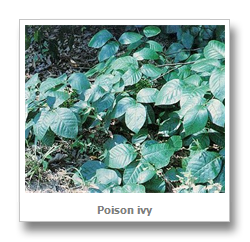
Poison ivy grows throughout most of North America, and is normally found in wooded areas. The plant is extremely common in suburban and exurban areas of New England, the Mid-Atlantic, and southeastern United States. It is not particularly sensitive to soil moisture, although it does not grow in desert or arid conditions. It grows in a wide variety of soil types. Poison ivy is dioecious; flowering occurs from May to July. The yellowish- or greenish-white flowers are typically inconspicuous and are located in clusters up to 8 cm (3.1 in) above the leaves. The berry-like fruit, a drupe, is mature by August to November with a grayish-white color.

Monday, March 26, 2012

Chinch Bugs #1 Enemy of St. Augustine Grass

Every weekend you’re out there tending to your lawn, weeding, watering and spending hundreds, if not thousands, of dollars on food and fertilizer to make it the pride and the envy of the neighborhood only to one day discover the grass inexplicably turning yellow, then reddish-brown and finally dying. This is the foul work of the chinch bug. A complex of three different species within the same family, chinch bugs have piercing-sucking mouthparts and they feed on the sap of grass plants.

Monday, March 5, 2012

Weeds Are Plants Growing in the Wrong Place

Weeds are plants, too. They don’t get no respect, though, because they’re growing in the wrong place, such as your lawn, garden and even cracks in the pavement. If left untreated, weeds will spread to compete with the grass for space, food and light. In the end, they will ruin the look of your lawn.

Click to play
Basically, weeds come in three varieties: grassy, sedge and broadleaf. Some weeds are perennials, which means they can last for more than one growing season, while annuals germinate, flower and die all within one season. Broadleaf weeds, which are characterized by wide, flat leaves, are most common in lawns and gardens. Dandelion, plantain and other broadleaf weeds are among the most common and troublesome turf pest problems in plants.